Thinking about adding an accessory dwelling unit to your San Mateo property? You are not alone. Homeowners across the Peninsula are exploring ADUs to create space for family, generate rental income, or boost flexibility when selling. If you feel unsure about size limits, setbacks, parking, and permits, this guide breaks it down in plain language. You will learn the rules that matter, what the City looks for, and how to move from idea to approved plans. Let’s dive in.
What counts as an ADU in San Mateo
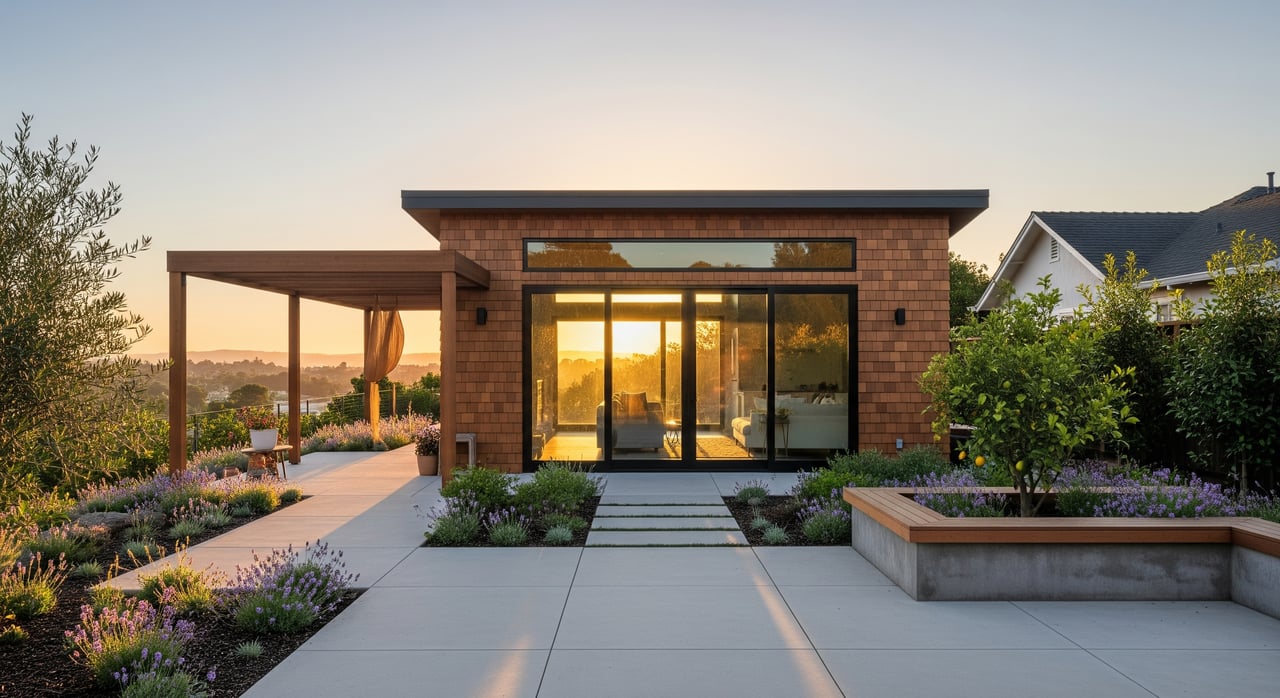
An accessory dwelling unit is a smaller, independent residence on the same lot as your primary home or within a multifamily building. You might build it as a detached cottage, attach it to your home, or convert existing space like a garage or attic. A junior ADU is a compact unit created within the primary residence. A JADU is typically no larger than 500 square feet and can be a smart way to add a small, separate living space.
California law sets a statewide framework for ADUs. The City of San Mateo follows that framework and applies local, objective standards for zoning, design, building safety, and fire requirements. Your project must meet both the state rules and the City’s published standards.
State rules vs. local rules
State law protects your right to build ADUs in many situations and limits how restrictive local regulations can be. It requires a ministerial review for compliant ADUs, which means no public hearing is needed if you meet objective standards. The City of San Mateo can apply local height, setback, and design rules as long as they align with state law. The City also administers building and fire code requirements to ensure safety.
The takeaway for you: state law gives broad permission, but the details that shape your final design and placement are local. Confirm parcel-specific rules with the City’s Planning and Building divisions before you commit to plans or pricing.
Where ADUs are allowed
Under state law, ADUs are allowed on many single-family lots and often on multifamily properties. In San Mateo, the zoning map and municipal code determine where they can go and what standards apply. Properties in special overlay areas, such as historic districts or areas with unique environmental constraints, may face additional review or limits.
If you are not sure about your zoning, contact the City’s Planning Division. Ask whether your parcel allows ADUs, and whether any overlays, easements, or floodplain rules affect your options. A quick zoning check early in the process can save time later.
How big and how many
How large your ADU can be and how many you can build depends on your lot type, your zoning, and whether you plan a detached, attached, or conversion unit. State law allows several configurations, including one ADU plus a JADU in many single-family scenarios, and different allowances for multifamily buildings. San Mateo implements these allowances with local objective standards that set maximum square footage and may account for floor area rules.
Owner-occupancy rules have largely been removed by statewide changes, but always confirm current local conditions. Before you finalize your design, ask Planning staff for the maximum ADU size for your property, whether a JADU is possible inside your existing home, and whether you can combine a detached or attached ADU with a JADU.
Height, setbacks, and placement
State law restricts overly burdensome setbacks for ADUs, but it does not eliminate local height or placement standards. In San Mateo, the zoning code sets height limits, setback requirements, lot coverage rules, and other objective criteria for accessory structures and ADUs. Fire safety can add requirements, especially for two-story ADUs or units near property lines.
Your lot’s conditions matter. Easements, slopes, and existing structures can affect where an ADU fits. Sketch a simple site plan to test possible locations and have Planning staff confirm setbacks and height limits for your parcel.
Parking rules at a glance
State policy greatly limits new parking requirements for ADUs. In many cases, cities cannot require new off-street parking, such as when an ADU is near public transit or replaces existing parking spaces inside a converted garage. The City of San Mateo follows these state rules and may have standards for where any required or replaced parking should go and whether tandem or compact spaces count.
Before you decide on a layout, ask whether your address qualifies for a parking waiver and whether existing garage conversions trigger any replacement parking rules. This is especially important near Caltrain or other transit.
Utilities and connections
ADUs must be served by utilities that meet building and health standards. Whether your ADU needs a separate water or power meter depends on local utility policies and your design. For sewer, the City evaluates capacity and may require connection fees or upgrades. If your property uses a septic system, county health rules apply and can influence siting and size.
Connect with the City’s Building Division early to understand connection expectations, meter options, and potential fees. If your designer has recent experience with San Mateo ADUs, they can help you anticipate utility needs.
Fees and cost planning
Expect planning and building permit fees, and possibly utility connection charges. State law limits impact fees for smaller ADUs, while larger units may be subject to proportional fees. The City of San Mateo updates fee schedules, and amounts can change over time.
Ask the Permit Center for an itemized fee estimate based on your concept. Share a basic site plan, rough floor plan, and any known constraints. An early estimate helps you right-size your design and budget.
Permits and timeline
If your ADU meets objective standards, San Mateo processes it ministerially, which is typically faster than a discretionary review. Projects that need exceptions, variances, or that sit in certain overlay areas can trigger a discretionary process and take longer. Timing depends on application completeness, correction cycles, and review staffing.
A pre-application meeting is one of the easiest ways to set clear expectations. Ask for likely timelines, required documents, and whether planning and building reviews can run at the same time.
Your step-by-step checklist
- Step 1: Confirm zoning and parcel constraints. Verify your zoning, overlays, and any easements with the Planning Division.
- Step 2: Request a pre-application meeting. Get a submittal checklist, documentation requirements, and fee guidance.
- Step 3: Prepare plans. Work with a designer or architect to align with objective zoning standards and the building code. Include a site plan with setbacks and parking.
- Step 4: Submit applications. Provide complete drawings and required reports. Combined planning and building submissions can speed review.
- Step 5: Respond during review. Address correction comments promptly. If denied for an objective reason, revise and resubmit.
- Step 6: Build, inspect, finalize. Schedule inspections as you go. You will need final sign-off before separate occupancy or renting.
Design, historic, and safety considerations
If your property is in a historic district or is a designated resource, expect additional review to ensure the ADU is compatible with the property’s character. Exterior changes can be more sensitive for street-facing facades.
All ADUs must comply with the California Building Code and local amendments. Fire department requirements may affect clearances, access, and materials. Two-story units and elevated sites add structural and egress considerations. A licensed architect, designer, or contractor familiar with San Mateo’s interpretations can help you avoid redesigns during plan check.
Renting your ADU
Long-term rental of ADUs is commonly allowed, subject to state and local rental rules. Short-term rentals may be limited by local transient occupancy rules. If you are planning to rent, confirm what is allowed for your address and know your obligations for disclosures, habitability, and business licensing.
Pro tips to avoid delays
- Start with zoning. A quick check confirms what is feasible before you pay for full drawings.
- Keep designs objective. Align with published standards to ensure ministerial review.
- Plan for utilities. Confirm sewer capacity, meter options, and any needed upgrades.
- Ask for a fee and timeline estimate. Use it to budget and choose the right design path.
- Think about privacy and placement. Good window placement, screening, and access can reduce friction and improve livability.
- Get the right team. A local designer with recent San Mateo ADU experience can prevent costly missteps.
Next steps and local resources
When you are ready to take the next step, contact the City of San Mateo Planning Division for zoning confirmation and ADU guidance. Reach out to the Building Division or Permit Center for application forms, building code requirements, inspection scheduling, and fee schedules. If fire access or hydrant flow could be an issue, loop in the Fire Department early. For tax questions, the San Mateo County Assessor can explain how new construction may affect your assessment. Statewide context and plain-language explanations are available through the California Department of Housing and Community Development and California Government Code sections that cover ADUs.
Thinking about how an ADU fits your bigger real estate plans, like refinancing, selling, or buying your next home? Talk with a local advisor who understands Peninsula neighborhoods and buyer preferences. For friendly, practical guidance on how an ADU might influence your home’s marketability or your long-term plan, connect with Jlu Real Estate. Schedule a personalized consultation.
FAQs
Can I build an ADU on any single-family lot in San Mateo?
- State law broadly allows ADUs, but your lot’s zoning, overlays, and utility access determine eligibility, so confirm with the City’s Planning Division.
Do I need to live in the main house if I add an ADU?
- State law removed many owner-occupancy mandates; verify the City’s current guidance for any remaining local conditions.
Is new parking required for an ADU in San Mateo?
- Often no; state law limits new parking requirements, and many sites near transit or with garage conversions qualify for reduced or waived parking.
How long does an ADU permit take in San Mateo?
- Ministerial approvals that meet objective standards move faster than discretionary reviews, and timing depends on application completeness and required corrections.
Will my ADU be charged impact or school fees?
- Some fees are reduced for smaller ADUs under state law, and the City’s fee schedule lists current amounts and thresholds, so request an itemized estimate early.
Can I rent my San Mateo ADU short-term?
- Long-term rental is commonly allowed under rental rules, but short-term rentals can be restricted, so verify what applies to your address before you advertise.